


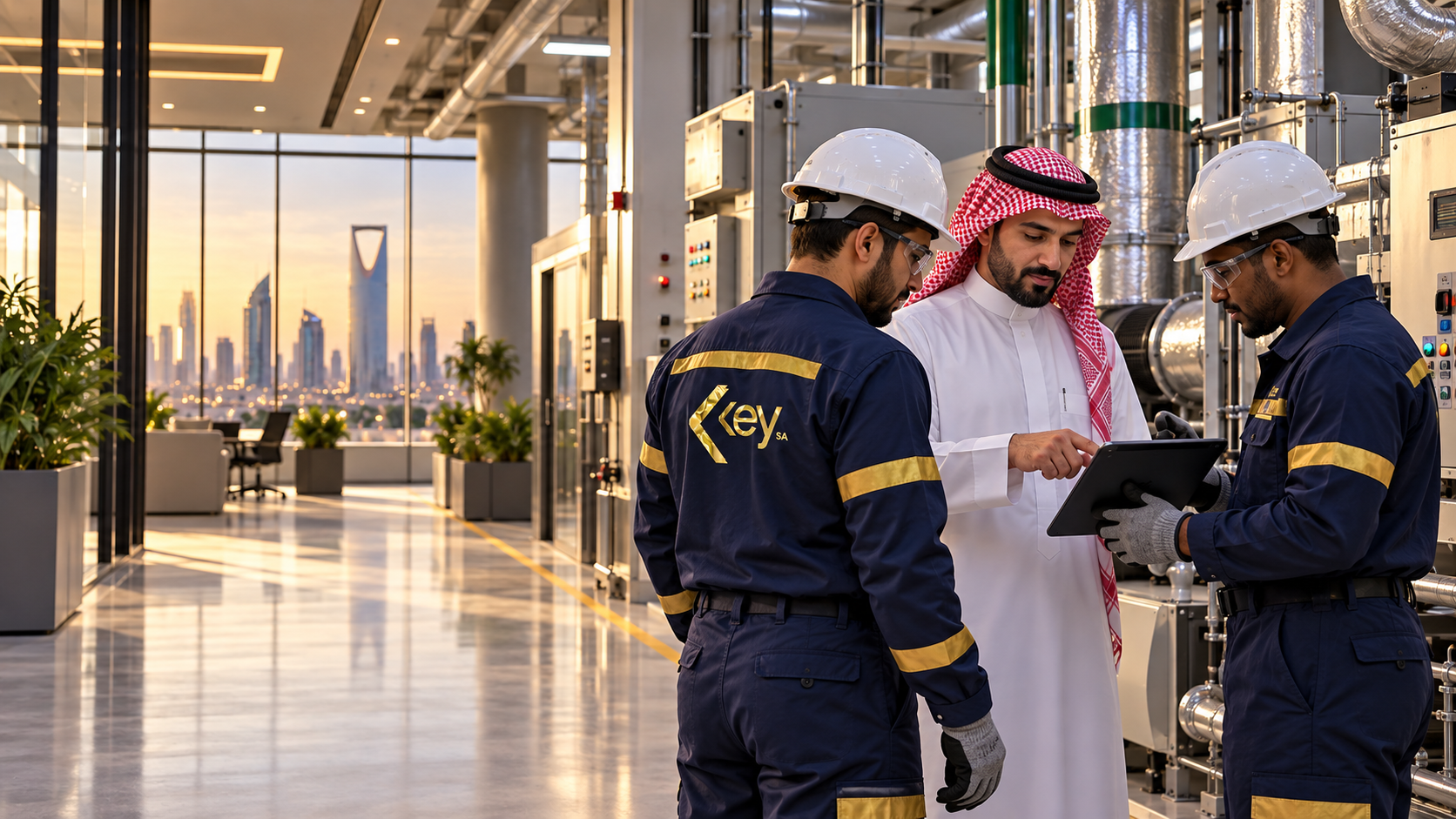
Facilities management services in Saudi Arabia are becoming more important as organizations operate larger, more connected and more demanding assets. Offices, industrial facilities, healthcare environments, transport sites and mixed-use developments all depend on reliable maintenance, safe operations, efficient resource use and a consistent experience for occupants.
Effective facilities management brings these responsibilities together under one coordinated operating model. It aligns people, processes, technology and performance information so that owners and operators can protect asset value, reduce disruption and make better decisions throughout the building lifecycle.
What Do Facilities Management Services Include?
Facilities management covers the coordinated activities required to keep buildings, infrastructure and workplaces functional, safe and fit for purpose. The exact service mix depends on the asset, operating hours, risk profile and regulatory obligations, but most comprehensive programmes combine hard services, soft services and management support.
Hard Facilities Management Services
Hard services relate to the physical systems that make a building operational. They commonly include mechanical, electrical and plumbing maintenance, heating and cooling systems, fire and life-safety systems, elevators, power distribution, building fabric, water systems and specialist equipment.
A strong maintenance strategy balances planned preventive maintenance, condition-based inspections and responsive repairs. This helps reduce unexpected failures while ensuring that critical assets receive attention based on their condition, consequence of failure and operational importance.
Soft Facilities Management Services
Soft services support the cleanliness, usability, security and day-to-day experience of a facilities. Typical examples include cleaning, reception, security coordination, landscaping, waste management, pest control, mailroom support and workplace services.
Although these activities may appear separate, their performance is closely connected. Clear service standards, trained teams, safe working methods and consistent supervision are essential for delivering a dependable occupant experience.
Integrated Facilities Management
Integrated facilities management combines multiple services within one governance structure. Instead of managing separate suppliers and disconnected reports, the client gains a coordinated service model with unified procedures, performance measures and escalation routes.
This approach can improve accountability, reduce duplication and give management a clearer view of cost, risk and service performance across the portfolio.
Why Facilities Management Matters in Saudi Arabia
Saudi Arabia’s built environment is expanding and modernising rapidly. New developments, industrial growth and major infrastructure programmes create long-term operational responsibilities after construction is complete. Buildings must not only open successfully; they must remain safe, efficient and serviceable for years.
Local operating conditions also influence maintenance planning. High ambient temperatures, dust, intensive cooling demand and varying occupancy patterns can affect equipment performance and asset life. A suitable FM programme therefore needs realistic maintenance intervals, accurate asset information and sufficient technical capability.
For organizations operating critical or regulated environments, documented procedures and evidence of completed work are especially important. Service records, inspection results, incident logs and corrective actions help demonstrate control and support informed management decisions.
Seven Elements of a Reliable FM Operating Model
1. Accurate Asset Information
A reliable service begins with an accurate asset register. Each maintainable asset should have a clear identity, location, classification, criticality and maintenance requirement. Incomplete or duplicated records make planning difficult and weaken reporting.
2. Risk-Based Maintenance Planning
Not every asset carries the same operational risk. Maintenance priorities should reflect safety, business continuity, replacement cost, statutory requirements and the effect of failure on occupants or production. Risk-based planning directs resources toward the work that matters most.
3. Competent People and Clear Responsibilities
Technology cannot replace technical competence. Effective delivery depends on trained technicians, supervisors and service managers who understand the site, follow approved methods and know when to escalate a risk. Roles and approval limits should be documented and understood.
4. Controlled Service Requests and Work Orders
Every request should follow a consistent path from logging and prioritisation to assignment, completion and verification. A Computer-Aided Facilities Management system can help teams monitor response times, recurring faults, backlog and service-level performance.
5. Health, Safety and Compliance
Facilities work often involves electrical systems, work at height, chemicals, moving equipment and other hazards. Appropriate risk assessments, permits, competency checks, personal protective equipment and supervision must be integrated into daily delivery. Requirements should be determined for each site and verified by qualified professionals.
6. Performance Measurement
Useful key performance indicators should reveal whether the service is becoming safer, more reliable and more efficient. Measures may include planned-maintenance completion, response and resolution times, repeat failures, energy intensity, audit findings, customer feedback and corrective-action closure.
7. Continuous Improvement
Monthly reviews should identify trends and agree practical actions. Repeated faults may require root-cause analysis rather than another temporary repair. High consumption may justify investigation of schedules, set points or equipment condition. Improvement should be based on evidence, ownership and completion dates.
How Technology Supports Better Facilities Management
Digital tools improve visibility when they are connected to disciplined processes. CAFM platforms, mobile work orders, sensors, dashboards and energy-management systems can make information available faster and support more consistent reporting.
Smart facilities management in Saudi Arabia extends this approach by connecting asset condition, maintenance activity and building data. The goal is not simply to collect more information; it is to turn reliable information into timely action.
How to Select a Facilities Management Provider
Before appointing a provider, define the required outcomes, scope boundaries and reporting expectations. Evaluate whether the bidder has relevant sector experience, qualified resources, mobilization capability, safe systems of work, appropriate technology and a credible method for managing subcontractors.
Price is important, but the lowest initial price may not represent the best lifecycle value. Review what is included, which assumptions have been made and how the proposed team will protect service continuity. A transparent proposal should explain staffing, maintenance standards, escalation processes and performance governance.
A Practical Mobilization Checklist
- Confirm the service scope, operating hours and critical areas.
- Validate asset registers, drawings, warranties and maintenance history.
- Identify statutory, contractual and client-specific requirements.
- Agree priorities, service levels, escalation routes and reporting formats.
- Complete site inductions, competency checks and safety documentation.
- Load verified assets and preventive tasks into the management system.
- Establish baseline measures for backlog, condition, consumption and satisfaction.
- Review early performance frequently and close mobilization gaps promptly.
Building Long-Term Value Through Facilities Management
Well-managed facilities support business continuity, employee wellbeing, customer confidence and responsible resource use. The strongest programmes connect strategic objectives with practical site delivery: technicians know what to do, managers can see what is happening and clients receive evidence that agreed outcomes are being achieved.
KEY FM supports organizations through integrated facilities management, asset and risk management, hard and soft services, sustainability and energy management, technology integration, and quality and safety. For advice on developing an operating model suited to your facilities, contact KEY FM Saudi Arabia.