


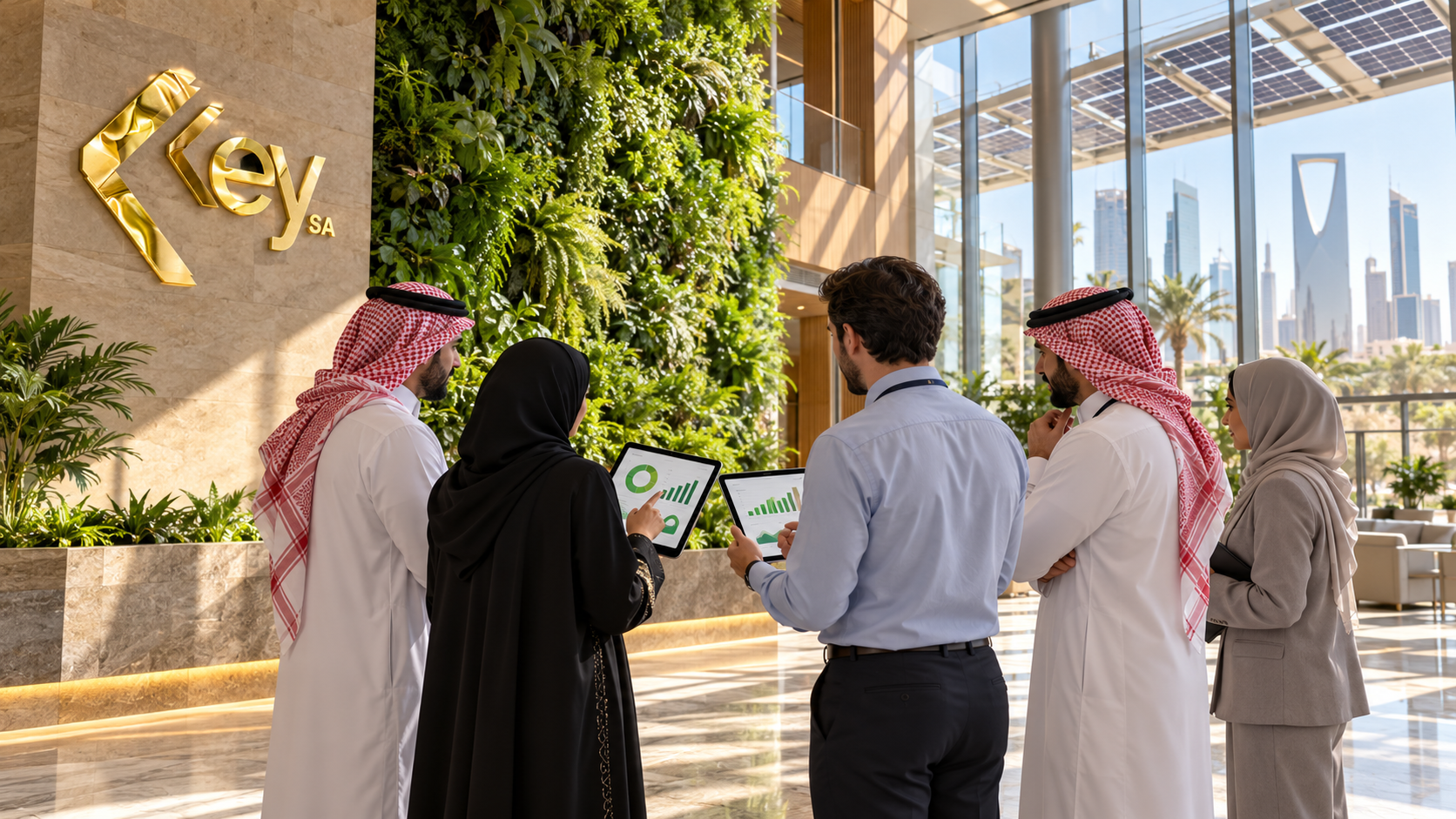
In the rapidly evolving landscape of Saudi Arabia, Environmental, Social, and Governance (ESG) is no longer a peripheral concern; it is a central pillar of national strategy. As the Kingdom accelerates its journey toward Vision 2030, organizations are under increasing pressure to demonstrate tangible sustainability outcomes. At the heart of this transformation lies facilities management (FM). Far from being merely custodial or maintenance-focused, modern FM acts as the primary engine for delivering ESG solutions in Saudi Arabia.
Facilities managers are now tasked with balancing operational efficiency with environmental stewardship and social responsibility. They must navigate complex regulatory frameworks like the Saudi Green Initiative (SGI), achieve prestigious green building certifications such as LEED and Mostadam, and ensure workforce safety and Saudization compliance. This article explores how strategic facilities management delivers robust ESG results within the unique context of the Kingdom.
The Intersection of Vision 2030 and Facilities Operations
Vision 2030 outlines a comprehensive blueprint for economic diversification, social development, and environmental sustainability. For businesses operating in Saudi Arabia, aligning daily operations with these national goals is essential for long-term viability and reputation. Facilities management serves as the operational bridge between high-level policy and physical reality.
Under the Saudi Green Initiative, the Kingdom has committed to ambitious targets, including planting 10 billion trees by 2030 and achieving net-zero emissions by 2060. While these are national goals, their implementation relies heavily on the granular data and actions managed within individual buildings. A facilities manager in Riyadh or Jeddah is responsible for ensuring that a building’s energy consumption aligns with carbon reduction targets, its water usage respects scarcity constraints, and its waste management practices support circular economy principles.
Furthermore, the social dimension of ESG in Saudi Arabia is deeply intertwined with national identity. The concept of Saudization (Nitaqat) requires organizations to prioritize local talent. Facilities management plays a pivotal role here by creating safe, inclusive, and engaging work environments that attract and retain Saudi nationals, thereby contributing directly to the social pillar of ESG.
Energy Efficiency: The Core of Environmental Impact
Energy consumption is often the largest operational cost for commercial and industrial facilities in the Kingdom. In a region where cooling loads are significant due to the climate, optimizing HVAC systems is not just an option; it is a necessity. ESG solutions in Saudi Arabia heavily rely on advanced energy management strategies.
Data-driven facilities management utilizes Building Management Systems (BMS) and Internet of Things (IoT) sensors to monitor real-time energy usage. By analyzing this data, FM teams can identify inefficiencies, such as equipment running at full capacity when occupancy is low, or refrigerant leaks in cooling towers. Implementing predictive maintenance through smart technology ensures that systems operate at peak efficiency, reducing the carbon footprint associated with electricity generation.
Moreover, the integration of renewable energy sources, such as solar photovoltaic (PV) panels on building rooftops, is a growing trend supported by government incentives. Facilities managers must oversee the installation and maintenance of these assets to ensure they contribute effectively to the building’s overall sustainability profile. This shift from reactive repair to proactive, data-led optimization is fundamental to delivering credible ESG solutions.
Water Stewardship in an Arid Climate
Water scarcity is a defining challenge for Saudi Arabia. The Kingdom has made significant strides in water conservation, aiming to reduce non-renewable water consumption by 25% by 2030. For facilities managers, this translates into rigorous water efficiency programs.
Strategies include the regular auditing of plumbing systems to detect and repair leaks, upgrading to low-flow fixtures, and implementing smart irrigation systems for landscape maintenance that utilize weather data to minimize usage. In industrial settings, closed-loop water recycling systems are increasingly common. Facilities management teams must ensure these complex systems are monitored closely to prevent contamination and maximize reuse rates.
Adhering to local regulations regarding wastewater discharge is also critical. Proper segregation of greywater and rainwater harvesting not only reduces reliance on municipal supplies but also demonstrates a commitment to resource circularity, a key metric in ESG reporting.
Waste Reduction and Circular Economy
Effective waste management is another area where facilities management directly influences ESG performance. The goal is to move away from a linear “take-make-dispose” model toward a circular economy. This involves rigorous sorting protocols for recyclables, composting organic waste from cafeterias, and ensuring hazardous materials are disposed of according to strict environmental standards.
Facilities managers must also educate occupants on proper waste segregation. Clear signage and accessible recycling stations in lobbies and workspaces encourage participation. By tracking waste diversion rates—the percentage of waste diverted from landfills—organizations can quantify their progress toward sustainability goals and report these metrics transparently to stakeholders.
Green Building Ratings: LEED and Mostadam
To validate their ESG efforts, many organizations in Saudi Arabia pursue green building certifications. The Leadership in Energy and Environmental Design (LEED) is a globally recognized standard, while the Ministry of Environment, Water and Agriculture’s Mostadam rating system is the national benchmark.
Achieving these ratings requires meticulous planning and documentation, areas where facilities management expertise is invaluable. From selecting low-VOC materials during renovations to ensuring optimal indoor environmental quality (IEQ) for occupant health, FM teams manage the day-to-day requirements necessary to maintain certification status. Regular audits and continuous improvement plans are essential to retain these prestigious designations, which serve as powerful signals of an organization’s commitment to sustainability.
Social Impact: Safety, Saudization, and Well-being
The “S” in ESG stands for Social, encompassing labor practices, community engagement, and human rights. In the context of Saudi Arabia, facilities management is instrumental in fostering a positive social environment.
Workforce Safety: A safe workplace is non-negotiable. Facilities managers are responsible for conducting regular safety inspections, ensuring compliance with local labor laws, and maintaining emergency preparedness plans. This includes managing fire safety systems, evacuation routes, and first-aid facilities. Reducing workplace accidents not only protects employees but also lowers insurance costs and enhances the company’s social license to operate.
Saudization and Talent Development: Aligning with Vision 2030 means building a workforce that is predominantly Saudi. Facilities management contributes to this by creating an environment where local talent can thrive. This involves providing training on sustainable practices, ensuring equitable access to facilities for all employees regardless of gender or background, and fostering a culture of inclusivity. By investing in the skills of local staff through green training programs, organizations empower their workforce to become agents of change.
Community Engagement: Facilities often serve as community hubs. ESG solutions extend beyond the building walls to include initiatives like tree planting drives organized by FM teams or supporting local charities. These activities strengthen community ties and demonstrate a genuine commitment to social responsibility.
The Role of Data: CAFM and Smart Systems
One cannot discuss modern ESG solutions without addressing the role of data. The transition from manual logbooks to Computer-Aided Facilities Management (CAFM) systems has revolutionized how sustainability is measured and managed.
CAFM platforms integrate data from various sources, including energy meters, waste logs, maintenance tickets, and space utilization sensors. This holistic view allows facilities managers to generate accurate ESG reports. Instead of relying on estimates, they can present precise figures on carbon emissions saved, water conserved, and waste diverted.
Smart building systems take this a step further by using artificial intelligence to predict equipment failures before they occur, preventing energy spikes associated with emergency repairs. These systems can also automatically adjust lighting and HVAC settings based on occupancy patterns, ensuring resources are used only when needed. This level of automation is crucial for scaling ESG efforts across large portfolios of buildings.
Conclusion: A Path Forward
Delivering ESG solutions in Saudi Arabia requires a multifaceted approach that integrates technology, policy, and people. Facilities management is the operational backbone of this strategy. By focusing on energy efficiency, water conservation, waste reduction, and social well-being, FM professionals enable their organizations to meet the ambitious targets of Vision 2030.
As the Kingdom continues its green transition, the demand for skilled facilities managers who understand these dynamics will only grow. Organizations that invest in data-driven FM strategies and align their operations with national sustainability goals will not only reduce their environmental impact but also future-proof their business against regulatory changes and market expectations. The path to a sustainable future is paved with the daily decisions made within our facilities.
Frequently Asked Questions
What are the key components of ESG solutions in Saudi Arabia?
The key components include energy efficiency (often through HVAC optimization and renewable energy), water conservation measures, waste reduction and recycling programs, adherence to green building standards like Mostadam and LEED, and social initiatives such as Saudization and workplace safety.
How does facilities management contribute to the Saudi Green Initiative?
Facilities management contributes by implementing energy-saving technologies, managing water resources efficiently, reducing carbon footprints through optimized operations, and participating in tree-planting or reforestation activities organized within their communities.
Why is data important for ESG reporting in Saudi Arabia?
Data from CAFM systems and smart sensors provides accurate, verifiable metrics on energy use, emissions, and resource consumption. This transparency is essential for credible ESG reporting and meeting the rigorous standards required by investors and regulators.
What role does Mostadam play in facilities management?
Mostadam is the national green building rating system in Saudi Arabia. It guides facilities managers on best practices for energy efficiency, water conservation, and indoor air quality, helping buildings achieve certification that validates their sustainability performance.
How can organizations align with Vision 2030 through FM?
Organizations can align with Vision 2030 by adopting sustainable operational practices, investing in local talent (Saudization), reducing environmental impact, and using technology to drive efficiency. This holistic approach ensures that daily operations support the Kingdom’s broader economic and social vision.
Discuss your facilities with our team
Get practical advice on the right operating model, services and technology for your buildings.